
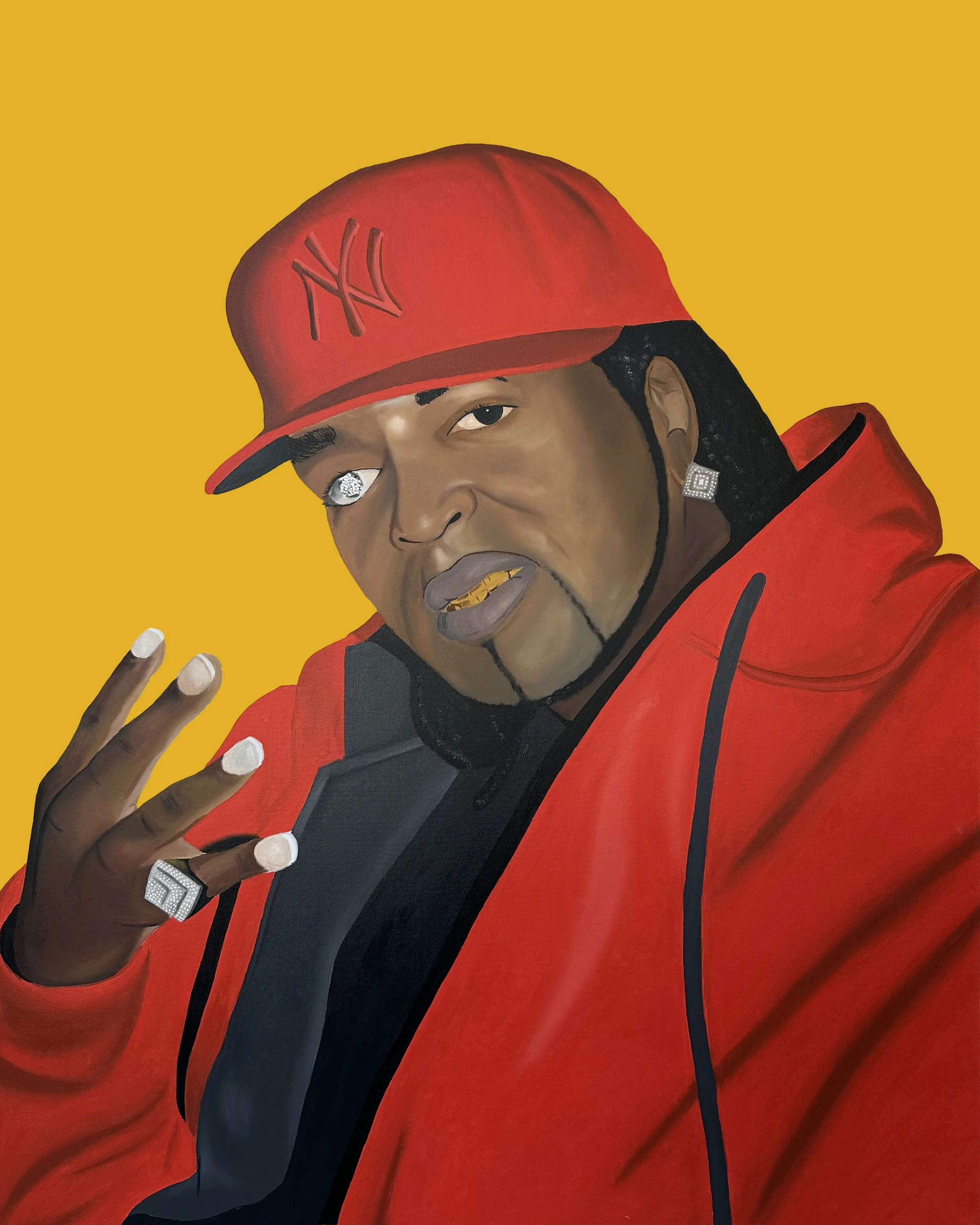
Diamond Eye
Oil & Acrylic on Canvas
Diamond Eye is a tribute to Mobile, Alabama artist The Last Mr. Biggs, honoring both his musical legacy and his resilience in the face of life-altering adversity. The work reflects a story shaped by survival, transformation, and the enduring power of creativity to persist beyond circumstance.
Emerging from Mobile, The Last Mr. Biggs represents a voice from the Gulf Coast that helped define a distinct era of Southern hip-hop, raw, emotional, and rooted in lived experience. His artistry carries the weight of authenticity, speaking to ambition, struggle, and the pursuit of recognition beyond local borders.
The title Diamond Eye symbolizes clarity, strength, and transformation, an emblem of seeing the world differently after hardship. It reflects the idea that even after facing profound challenges, vision can evolve into something sharper, more valuable, and unbreakable.
Created by JENYES, this piece honors Biggs not only as a musician, but as a survivor and creative force whose journey embodies resilience and artistic truth. Diamond Eye stands as a meditation on endurance, identity, and the brilliance that can emerge from adversity, while celebrating a hometown figure whose influence continues to resonate within Mobile’s cultural legacy.
Limited Edition Print Release
Each artwork is available as a 16" x 20" Limited Edition Print, with only 10 prints produced per image. Printed on premium archival paper and individually numbered, these collector editions offer an opportunity to own a piece of the Cheers to the Culture exhibition in a more accessible format while preserving the exclusivity of the original works. Once all 10 prints have been sold, the edition will be permanently retired and never reproduced in this size again. Each print serves as a celebration of culture, achievement, and artistic storytelling, created for collectors who value both the artwork and the legacy it represents.
The Culture
The Last Mr. Biggs holds cultural significance as part of the Southern hip-hop narrative that emerged from cities like Mobile, where local scenes often built their influence outside of the major industry hubs.
He is best known for his work in the late 1990s and early 2000s, a period when Southern rap was expanding its identity and gaining national attention. His music reflects the era’s core themes: street survival, ambition, regional pride, and the realities of life in underrepresented communities. That authenticity is a major reason his work resonates within Southern hip-hop culture.
Culturally, his significance can be understood in a few layers:
1. Southern voice in a growing movement
He is part of the generation of artists who helped establish the South as a legitimate force in hip-hop, contributing to the broader acceptance of Southern storytelling, slang, and production styles in mainstream music.
2. Representation of Mobile’s creative output
Coming out of Mobile, Alabama, his presence in the industry reflects the often-overlooked contributions of smaller Southern cities. Artists like him helped prove that meaningful cultural influence wasn’t limited to Atlanta, Houston, or New Orleans.
3. Music rooted in lived experience
His work carries the tone of real-life narrative—reflecting struggle, survival, and resilience. This authenticity is a defining trait of Southern rap from that era.
4. Legacy of influence rather than chart dominance
While he may not be as commercially prominent as some peers, his cultural value lies in representation, regional impact, and the groundwork laid for later artists from similar backgrounds.
Cheers
We honor life's most meaningful moments through art, transforming them into timeless treasures that transcend generations.
Celebrate
We celebrate life through art, presenting works that invite every viewer into a moment of admiration and salute.